Ecommerce Marketing Singapore: Complete Guide to Growing Your Online Store


Ecommerce Marketing Singapore: Complete Guide to Growing Your Online Store
Running an online store in Singapore is exciting, but also competitive. With so many brands on Shopee, Lazada, TikTok Shop, and Instagram, it’s not enough to just list your products and hope people buy. You need a clear plan to attract customers, get them to check out, and keep them coming back.
This guide walks you through everything you need to grow an ecommerce business in Singapore. You’ll learn the essential channels to use, the strategies that actually work here, how to track your results, and how to scale your store without burning money on ads that don’t convert.
Whether you're selling on a marketplace, running your own website, or doing both — this guide will show you how to build a marketing system that brings in steady traffic, real customers, and predictable sales.
What is Ecommerce Marketing?
Definition and Core Components
Ecommerce marketing is simply how you bring people to your online store and turn them into paying customers. It’s not just posting on social media or running ads, it’s the whole engine that drives traffic, conversions, and repeat sales.
Here’s a simple breakdown:
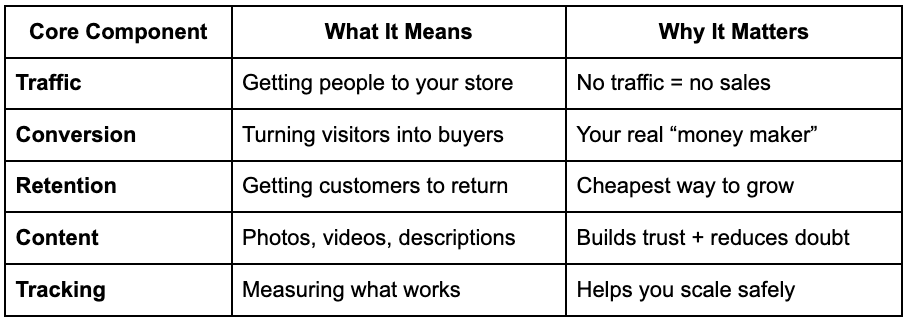
Ecommerce grows fastest when all five work together, not separately.
Singapore’s Ecommerce Landscape
Singapore is one of the strongest ecommerce markets in SEA — small country, big buying power.
Here’s what makes SG unique:
Singapore Shopper Behaviours
- Shops mostly on mobile
- Loves vouchers, bundles, and fast delivery
- Compares across multiple platforms
- Trusts reviews, UGC, and creators
- Buys from brands that feel reliable and convenient
Where Singaporeans Shop
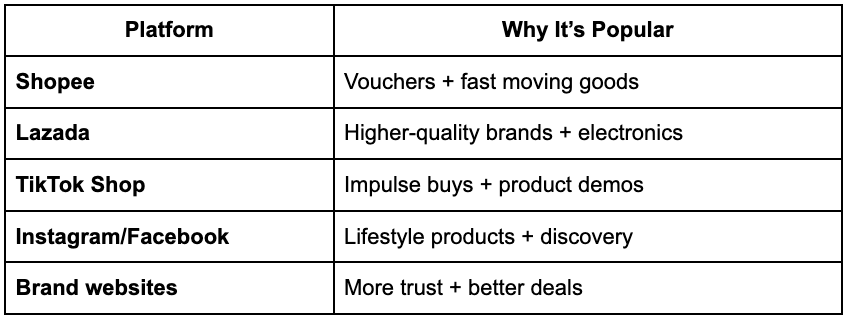
To win in Singapore, your brand needs to be present where your customer is — not just where it’s convenient for you.
Why Singapore Businesses Need Specialized Ecommerce Marketing
Singapore shoppers have high expectations. They want fast delivery, clear information, good deals, and strong social proof. If your ecommerce marketing isn’t planned properly, shoppers will simply buy from someone else.
Here’s why specialized ecommerce marketing matters:
❌ Common Problems Without a Proper Ecommerce Strategy
- Lots of traffic, but no sales
- High add-to-cart, low checkout
- Low repeat purchase rate
- Ads cost more but convert less
- Competitors steal your customers
✅ What Specialized Ecommerce Marketing Fixes
- Targets the right shoppers
- Improves product page conversions
- Uses the right channels for SG
- Builds trust with strong content
- Brings in repeat customers automatically
Ecommerce in Singapore is fast-moving — with the right strategy, your brand can stand out and grow quickly.
Ecommerce Marketing vs Traditional Digital Marketing
Key Differences in Approach
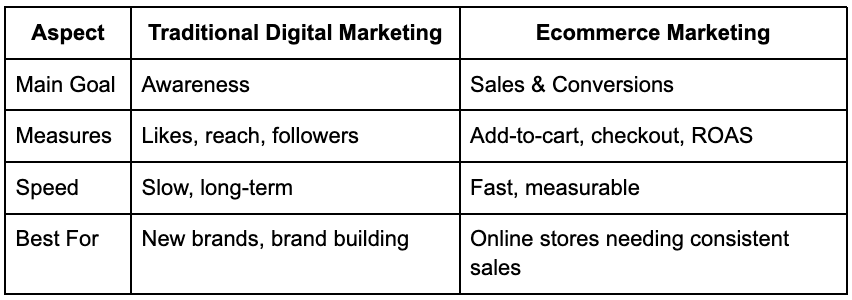
Traditional digital marketing focuses on visibility — getting your brand seen through posts, videos, and general ads. It’s useful for long-term branding, but it doesn’t always drive immediate sales.
Ecommerce marketing is action-focused. Every campaign is built to get shoppers to click, add to cart, and checkout. It’s not about looking popular — it’s about getting real customers.
Here’s a simple comparison:
When to Use Each Strategy
Think of both strategies like tools — you use different ones for different situations.
Use Traditional Marketing When:
- You’re building a new brand
- You want people to recognise your name
- You’re preparing for a major launch
- You need long-term trust
Use Ecommerce Marketing When:
- You want immediate sales
- You need stable daily/weekly revenue
- You have product stock to move
- You’re running promos, bundles, or seasonal campaigns
Most Singapore ecommerce brands use both, just in different phases.
Integration Benefits for Singapore Businesses
In Singapore’s competitive market, combining both strategies works best.
Here’s how they support each other:
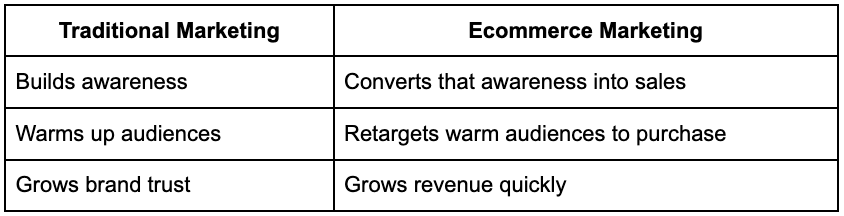
Why Integration Wins in SG:
- Shoppers research heavily before buying
- They check IG/TikTok before visiting your website
- They respond to brands they’ve seen multiple times
- A warm audience converts much cheaper
When used together, you get the best mix of trust + sales — the perfect setup for long-term ecommerce growth in Singapore.
Essential Ecommerce Marketing Channels in Singapore
Singapore shoppers don’t buy from just one place. They browse on Instagram, watch TikTok reviews, compare prices on Shopee, look for vouchers on Lazada, and finally purchase on whichever platform feels safest or gives the best deal.
To grow your ecommerce brand, you need to be present across the channels that matter most in Singapore — not just the ones you like.
Below is a cleaner, more visual breakdown of each channel and how it helps you generate sales.
Search Engine Optimization (SEO)
SEO helps your store show up on Google when someone searches for products like yours. This brings in free, high-intent traffic over time.
Best SEO Moves for Singapore Stores
- Use clear keywords in product titles
- Add helpful blog posts (guides, comparisons)
- Optimise for mobile (most SG shoppers browse on phones)
- Improve loading speed
- Add local terms like “Singapore delivery” or “SG stock”
Why it works:
Singaporeans love researching before buying — SEO helps you show up during that research phase.
Pay-Per-Click Advertising (PPC)
This includes Google Ads, Meta Ads (Facebook/Instagram), and TikTok Ads. PPC is one of the fastest ways to get traffic and sales.
.png)
PPC is usually the main revenue driver for ecommerce brands in Singapore.
Email Marketing Automation
Email is still one of the most profitable channels — because it focuses on repeat customers, the cheapest way to grow.
Must-Have Ecommerce Email Flows
- Welcome series
- Abandoned cart flow
- “Win-back” emails
- Product recommendation emails
- Sale / seasonal announcements
Tools like Klaviyo or Shopify Email make this easy.
Social Media and Social Commerce
Singapore shoppers rely heavily on visuals. TikTok videos, Instagram Reels, and Meta ads can quickly grab attention and push customers to your store.
Social Commerce = Buy Directly in the App
- TikTok Shop
- Instagram Shopping
- Facebook Shop
Great for impulse-friendly products like beauty, skincare, home items, and fashion.
Marketplace Marketing (Shopee, Lazada, Carousell)
Marketplaces are huge in Singapore — and extremely competitive.
Success depends on:
- Strong product photos
- Optimised titles & keywords
- Vouchers and bundles
- Good ratings and reviews
- Shopee/Lazada ads to boost ranking
Marketplaces are unbeatable for volume, but margins can be thinner.
Content Marketing and Blogging
Useful content builds trust and supports SEO.
Examples:
- “Best bedsheets for Singapore weather”
- “How to choose the right cat litter”
- “Top 10 gifts under $30 in Singapore”
Content helps convert unsure visitors into confident buyers.
Influencer and Affiliate Marketing
Singapore shoppers trust real opinions. Influencers help showcase your product in a relatable way.
Best for:
- Product launches
- UGC-style reviews
- Gift guides
- Unboxing videos
- TikTok “test it for you” content
Small creators (micro-influencers) often bring the best ROI.
Ecommerce Performance Marketing: Driving Measurable Results
Performance marketing is the engine behind profitable ecommerce growth. It’s not about getting likes or views — it’s about getting real customers, lowering your cost per purchase, and scaling what works.
Below is a clearer, more structured version with tables, flows, and practical examples.
What is Ecommerce Performance Marketing?
Ecommerce performance marketing focuses on actions that lead to sales, such as:
- Product page views
- Add-to-carts
- Checkout initiations
- Purchases
Instead of asking “Did people see my ad?”, performance marketing asks:
“Did my campaign bring buyers?”
This approach works especially well for Singapore ecommerce brands because everything is measurable — giving you a predictable way to scale.
Quick Breakdown
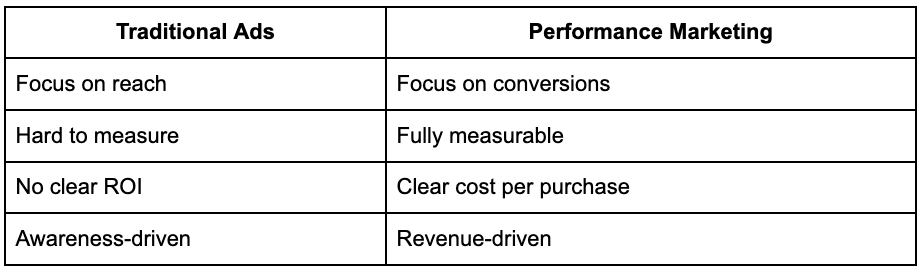
Key Performance Marketing Channels
Each channel plays a different role in driving ecommerce sales:
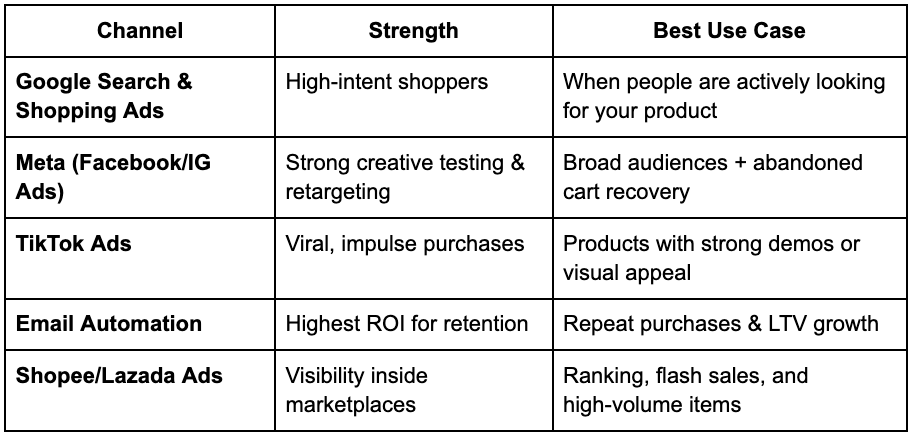
Using these channels together gives your brand a strong, full-funnel presence in Singapore.
Setting Up Performance Tracking
Before running ads, tracking must be set up properly — otherwise, you won’t know what’s driving sales.
Must-Have Tracking Tools
- Meta Pixel
- TikTok Pixel
- Google Ads Conversion Tracking
- Google Analytics 4 (GA4)
- UTM Links
- Shopify / WooCommerce / Marketplace Analytics
Without proper tracking, performance marketing becomes guesswork — and guesswork is expensive.
Optimizing for ROI and Conversions
Once tracking is in place, the goal becomes simple:
Lower your cost per purchase while increasing sales.
Here’s the Ecommerce Optimization Flow used by top SG brands:
- Test multiple creatives (hooks, angles, visuals)
- Find the winning ad (highest CTR + lowest cost per add-to-cart)
- Improve product pages (photos, reviews, delivery info)
- Retarget abandoned visitors
- Upsell & bundle to increase AOV
- Refresh ads every 1–3 weeks to avoid fatigue
- Scale slowly (10–20% per week) to maintain stability
Micro Case (Singapore Example)
A local skincare brand tested 5 TikTok videos.
- 3 videos failed
- 1 did okay
- 1 video dropped cost-per-purchase from $38 → $12
They scaled the winning video across Meta + TikTok Shop and doubled revenue in 30 days.
That’s performance marketing in action.
Singapore Ecommerce Platform Marketing Strategies
Singapore shoppers don’t stick to one place. They browse, compare, and switch platforms before buying.
To grow your ecommerce brand, you need strategies that match how Singaporeans actually shop across Shopee, Lazada, Carousell, TikTok Shop, and your own website.
This section breaks down the best strategies for each platform — in simple, practical terms.
Shopee Marketing Tactics and Best Practices
Shopee shoppers are voucher-driven, price-sensitive, and love deals. To win on Shopee, you must optimise your listings and use Shopee’s internal advertising tools properly.
Shopee Success Formula
- Product Listings: Use clear images, keyword-rich titles, simple descriptions
- Vouchers: Offer coins cashback, bundle deals, and time-limited promos
- Ratings: Encourage reviews (with free gifts or inserts)
- Shopee Ads: Use Search Ads to rank higher + Discovery Ads for visibility
Boost your top-selling items first — not all products need ads.
Lazada Advertising and Optimization Strategies
Lazada shoppers usually have higher spending power and look for better quality products.
Best Practices for Lazada
- Use Sponsored Search and Sponsored Display
- Offer free shipping whenever possible
- Join Lazada’s Mega Campaigns (9.9, 11.11, 12.12)
- Add rich content to your page (videos, comparison tables)
Lazada rewards listings with higher conversion rates — so improving product pages gives you both higher rank + cheaper ads.
Carousell Marketing for Local Businesses
Carousell works very well for local services, home products, furniture, electronics, and second-hand items.
How to Stand Out on Carousell
- Use Carousell Boosts to appear at the top
- Post during peak hours (evenings + weekends)
- Add local wording (“Fast collection”, “Near MRT”)
- Reply fast — Carousell buyers expect quick responses
Carousell is less “glam”, but extremely effective for Singapore-based buyers.
Own Website vs Marketplace Strategy
Most Singapore brands don’t choose one — they use both.
Here’s the difference:
- Marketplace (Shopee/Lazada): Fast volume, high traffic, lower margins
- Own Website: Higher margins, stronger brand, repeat customers
Balanced Approach
- Use marketplaces to acquire customers
- Use your website to build loyalty and increase lifetime value
This hybrid strategy works extremely well for Singapore SMEs.
Multi-Platform Integration Approach
Instead of running each platform separately, you want everything to work together.
Simple Cross-Platform Funnel (Singapore Model)
- TikTok/Instagram video → builds interest
- Google Search ad → captures intent
- Shopee/Lazada listing → easy checkout
- Email remarketing → repeat purchases
- Retargeting ads → recover cart abandoners
Why this works:
Singapore shoppers almost always check at least 2–3 platforms before buying. A multi-platform approach keeps your brand in front of them at every step.
Ecommerce PPC Agency Services: Maximizing Paid Advertising
Paid ads (PPC) are one of the fastest ways to grow an ecommerce business in Singapore — but only if they’re run properly.
This section explains how PPC works and what a good ecommerce PPC agency should help you achieve.
Google Ads for Ecommerce Success
Google Ads helps you capture shoppers who are already searching for what you sell. These are high-intent buyers — the people most likely to purchase.
Best Google Ads Types for Ecommerce
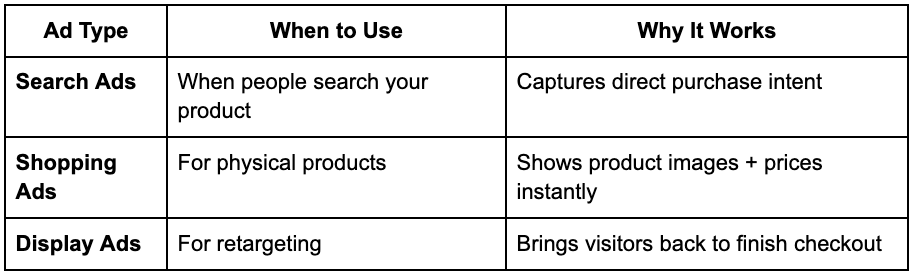
Singapore Tip:
Shoppers here almost always compare products on Google before buying — Shopping Ads give you a strong advantage.
Facebook and Instagram Advertising
Meta Ads (Facebook + IG) are great for discovery, storytelling, and retargeting. This is where you test different creatives and hooks to find what drives conversions.
What Works Well
- Short videos
- Before/after visuals
- UGC-style product demos
- Testimonials from local customers
- Carousel ads with multiple products
A strong Meta strategy + a strong website = consistent sales.
Platform-Specific PPC (Shopee, Lazada)
Marketplace ads boost your product ranking and help you win more visibility inside Shopee & Lazada.
- Shopee: Search Ads, Discovery Ads: Helps rank faster + win Buy Box
- Lazada: Sponsored Search, Sponsored Display: Great for premium categories
Marketplace PPC is especially effective during mega campaigns like 9.9, 11.11, 12.12.
PPC Budget Optimization for Singapore Market
PPC should not be guesswork — it should be a controlled, measurable system.
Smart Budget Steps
- Start with small test budgets
- Find your winning creatives
- Increase budget 10–20% weekly
- Split budget across platforms (Meta + Google + TikTok)
- Refresh ads every 1–3 weeks
Simple Budget Rule for SG SMEs
Spend 70% on scaling what works, 30% on testing new ideas.
This stops wastage and keeps your cost-per-purchase low.
15 Proven Ecommerce Marketing Strategies for Singapore Businesses
Singapore’s ecommerce market moves fast. Trends change quickly, competition is high, and shoppers compare everything before buying.
These 15 proven strategies are what successful ecommerce brands in Singapore use to grow consistently.
1. Search Engine Optimization for Local Discovery
SEO helps your store show up on Google when shoppers search for products like yours. Singaporeans often compare before buying, so showing up early in their research increases your chances of getting the sale.
Suggestions:
- Add “Singapore” or “SG delivery” to product titles
- Write helpful blogs that answer buying questions
- Use clear product descriptions with keywords
- Make sure your website loads fast on mobile
2. Conversion Rate Optimization (CRO)
CRO is about improving your product pages so more visitors become buyers. In Singapore’s competitive market, even small differences — like delivery info or better photos — can change buying decisions.
Suggestions:
- Add clear benefits and simple features
- Show delivery timing (e.g., “1–3 days SG delivery”)
- Add reviews from Singapore customers
- Use high-quality photos and short videos
3. Email Marketing Automation Workflows
Email helps you bring customers back and increase repeat purchases. Shoppers in Singapore respond well to reminders, promos, and personalised offers.
Suggestions:
- Set up abandoned cart emails
- Send a welcome discount for new sign-ups
- Create a win-back email for inactive customers
- Use post-purchase emails to upsell related items
4. Social Commerce and Shoppable Content
People love buying directly inside TikTok, Instagram, and Facebook. These channels make shopping feel fast and convenient.
Suggestions:
- Use Instagram Product Tags
- Create TikTok product demo videos
- Use IG Reels to show your product in action
- Add “Shop Now” buttons everywhere
5. Customer Retention and Loyalty Programs
It’s cheaper to keep existing customers than find new ones. Singaporeans love rewards, points, and members-only perks.
Suggestions:
- Offer points for every $1 spent
- Give birthday discounts
- Create member-only sales
- Send emails to reward repeat customers
6. User-Generated Content (UGC) and Reviews
Singaporeans trust real people more than polished ads. UGC feels authentic and boosts credibility.
Suggestions:
- Ask customers to send photos or videos
- Incentivise reviews with small perks
- Use UGC in your ads
- Highlight top reviews on product pages
7. Mobile Commerce Optimization
Most shoppers in Singapore browse and buy using their phones. A slow or messy mobile site will immediately lose sales.
Suggestions:
- Use large buttons
- Remove unnecessary pop-ups
- Make checkout simple and short
- Test your site on both iPhone and Android
8. Personalisation and AI-Driven Recommendations
Personalised recommendations make shopping feel easier and increase average order value (AOV).
Suggestions:
- Add “You may also like…” sections
- Use apps that show recommended bundles
- Offer personalised email recommendations
- Highlight “bought together” items
9. Retargeting and Remarketing Campaigns
Most people don’t buy on their first visit. Retargeting brings them back with reminders and offers.
Suggestions:
- Run Meta retargeting ads for website visitors
- Retarget add-to-cart users with promotions
- Show products they viewed before
- Use email retargeting for abandoned carts
10. Influencer Partnership Strategies
Singapore shoppers rely heavily on influencer recommendations, especially micro-creators.
Suggestions:
- Collaborate with TikTok micro-influencers
- Use their videos as ads
- Give them unique discount codes
- Ask for unboxing or “test it for you” content
11. Content Marketing for Brand Authority
Helpful content builds trust and positions your brand as the smarter choice. Singaporeans appreciate clear, practical information.
Suggestions:
- Write simple how-to guides
- Create comparison posts
- Produce “top 10” shopping lists
- Share educational Instagram posts
12. Video Marketing and Live Streaming
Videos help shoppers understand your product instantly. Live streams, especially on TikTok, can bring big spikes in sales.
Suggestions:
- Post short 10–20 sec demos
- Use before/after formats
- Host live selling sessions with promos
- Add subtitles for mobile viewers
13. Seasonal Campaign Planning
Singapore has many peak shopping moments — maximise sales through planned campaigns.
Suggestions:
- Prepare early for 9.9, 10.10, 11.11, 12.12
- Launch festive bundles for CNY or Christmas
- Offer flash deals during GSS
- Refresh creatives for each event
14. Cross-Border and Regional Expansion
Singapore is small, so many brands expand to nearby markets like Malaysia or Indonesia.
Suggestions:
- Test small budgets on cross-border ads
- Join Shopee/Lazada cross-border programs
- Offer affordable international shipping
- Study each country’s preferred price range
15. Data Analytics and Customer Insights
Data helps you scale your store with confidence. Knowing what works helps you spend smarter.
Suggestions:
- Track cost per purchase
- Monitor best-selling SKUs
- Identify top audiences and ad angles
- Study repeat purchase behaviour
Singapore Ecommerce Marketing Compliance and Best Practices
Marketing online in Singapore comes with strict rules. Following these guidelines not only keeps your business safe — it also builds trust with customers, which leads to better conversions and long-term loyalty.
Below is a simple, clear breakdown of the key compliance areas you need to know.
PDPA Requirements for Ecommerce Marketing
The Personal Data Protection Act (PDPA) protects how customer data is collected, stored, and used.
This matters for ecommerce because shoppers often submit their:
- Names
- Emails
- Phone numbers
- Addresses
- Payment details
Best Practices:
- Always include a consent checkbox during sign-ups
- Clearly state how customer data will be used
- Allow users to unsubscribe easily
- Delete data that’s no longer needed
When customers feel safe sharing information, they are more likely to buy again.
Consumer Protection Guidelines
Singapore’s Consumer Protection (Fair Trading) Act ensures customers aren’t misled by false claims or unclear pricing.
Avoid:
- Fake discounts
- Hidden fees
- Exaggerated product claims
- “Before/after” images that are not real
Do:
- Be clear about pricing
- Show honest reviews
- Highlight delivery times accurately
Transparent brands convert better — especially in Singapore’s research-heavy market.
Advertising Standards and Regulations
The Advertising Standards Authority of Singapore (ASAS) oversees ad accuracy. All ads must be truthful, responsible, and not misleading.
Examples of non-compliant ads:
- “Guaranteed results” without proof
- Unrealistic before/after transformations
- Paid reviews not labelled as sponsored
Keep your ads simple, honest, and backed by real proof.
Data Collection and Consent Management
If you use tracking tools (Meta Pixel, Google Analytics, TikTok Pixel), you must inform your customers.
Best Practices:
- Add a cookie consent banner
- Clearly explain what data is tracked
- Provide an option to opt out
- Use secure tools for storing customer info
Clear data practices show professionalism and help customers trust your brand.
Measuring Ecommerce Marketing Success: KPIs and Analytics
You can’t grow what you can’t measure. In ecommerce, the brands that win in Singapore are the ones that track the right numbers — not vanity metrics like likes or views, but metrics that show real buying behaviour.
Here’s a simple breakdown of what to measure and how to understand your results.
Essential Ecommerce Marketing Metrics
These are the KPIs every Singapore ecommerce brand should track:
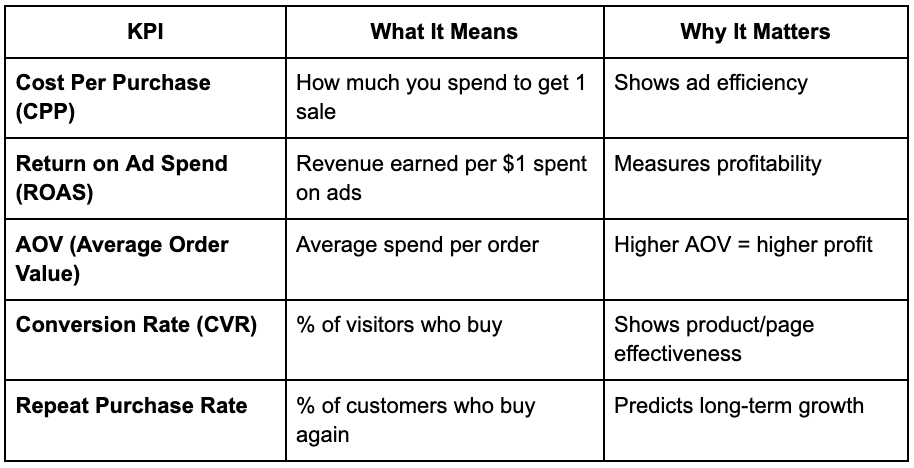
These KPIs tell you whether your store is healthy or needs fixing.
Singapore Market Benchmarks by Industry
Here are general ranges based on Singapore ecommerce brands:
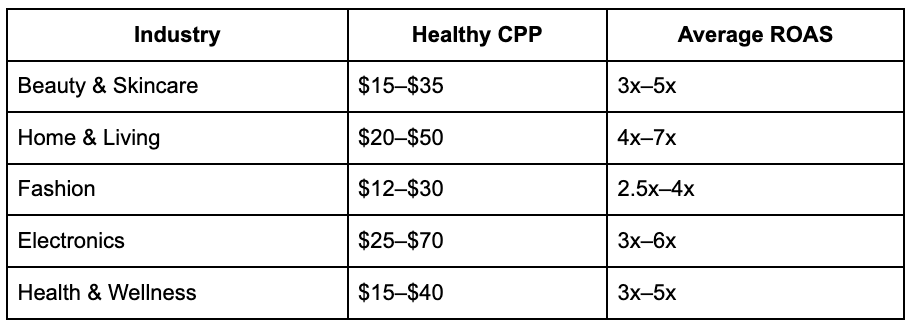
Note: These numbers vary depending on creative quality, product price, and platform.
Analytics Tools and Tracking Setup
To measure your results properly, set up these tools:
- Google Analytics 4 (GA4)
- Shopify Analytics / WooCommerce Analytics
- Meta Pixel & Conversion API
- TikTok Pixel
- UTM tracking for all ads
- Google Ads conversion tracking
These tools show exactly which ads drive sales — and which ones to turn off.
ROI Calculation and Performance Reporting
A simple way to understand your marketing ROI is:
ROI = (Revenue – Ad Spend) / Ad Spend
For example:
If you spend $2,000 and earn $8,000:
ROI = (8000 – 2000) / 2000 = 3x ROI
Tip:
Create a weekly report tracking:
- Spend
- Revenue
- CPP
- ROAS
- Best-performing creatives
- Top audiences
This keeps your marketing decisions clear and data-driven.
Ecommerce Marketing Budget Planning for Singapore SMEs
Most Singapore SMEs struggle with one thing:
How much should I spend on marketing — and where should the money go?
Here’s a simple, practical guide to planning your ecommerce marketing budget without overcomplicating anything.
Budget Allocation by Marketing Channel
A balanced budget helps you test, learn, and scale safely.
Here’s a simple breakdown many SG brands follow:
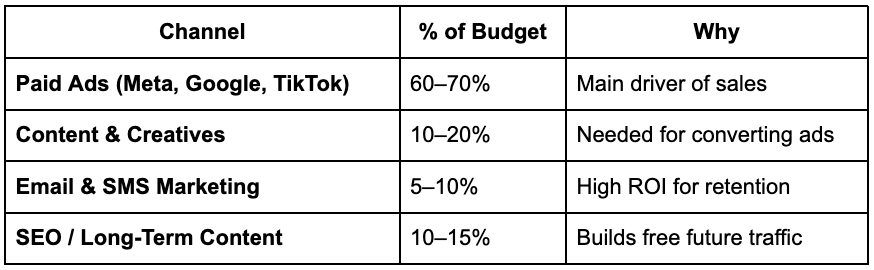
This mix gives you steady sales now and free traffic later.
Cost Benchmarks for Singapore Market
Here are general monthly ranges for SG ecommerce brands:
- Starter budget: $1,000–$3,000/month
- Growing brands: $3,000–$8,000/month
- Scaling brands: $10,000–$50,000/month
You don’t need a huge budget to start — you just need a clear plan and the ability to test quickly.
Scaling Your Marketing Investment
Never scale all at once. Scale slowly and based on numbers.
Simple scaling rule:
➡️ If your cost per purchase is profitable → increase budget by 10–20% per week
➡️ If costs go up → pause, fix creatives, test again
Scaling too fast is one of the biggest ways SMEs burn money.
Expected ROI Timelines by Strategy
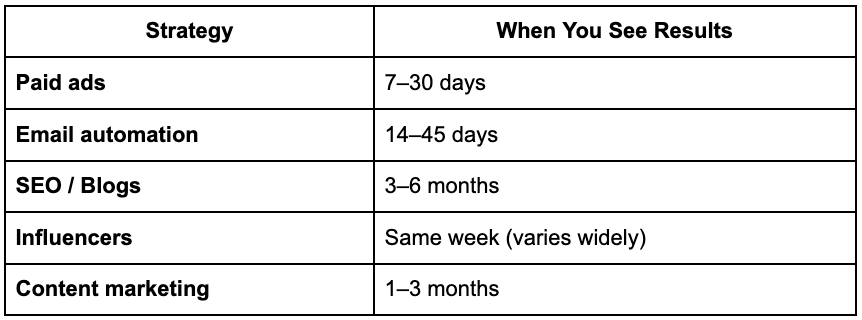
Paid ads bring fast results. SEO and content take longer — but they are worth it in the long run.
Choosing an Ecommerce Digital Marketing Agency in Singapore
Finding the right ecommerce agency in Singapore can make or break your growth.
A good agency should help you get more sales, improve your ads, and build a system you can scale. A bad one will burn your budget with nothing to show for it.
Here’s a simple guide to choosing the right partner.
Agency vs In-House vs Hybrid Approach
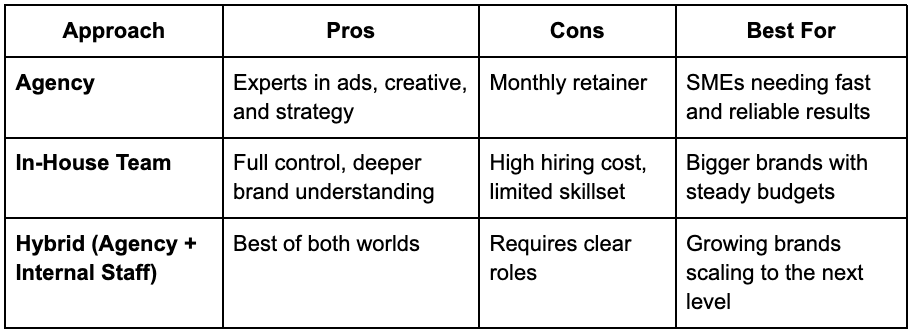
Most Singapore SMEs start with an agency, then move into hybrid as revenue grows.
Evaluating Agency Expertise and Experience
Not all “ecommerce agencies” are the same. Some specialise in content, others in ads, and a few in actual revenue growth.
Look for agencies with:
- Real ecommerce case studies
- Experience with SG brands and budgets
- Clear understanding of Meta, Google, TikTok, and marketplaces
- Strong creative production (UGC, videos, statics)
- Transparent reporting and tracking setup
If they can’t show past results, be careful.
Questions to Ask Potential Partners
Ask simple, direct questions like:
- “What’s your experience with Singapore ecommerce brands?”
- “What results have you achieved for clients like me?”
- “How do you test creatives?”
- “Can I see your reporting dashboard?”
- “Do I keep my ad accounts?”
A good agency answers confidently and clearly.
Red Flags and What to Avoid
Avoid agencies that:
- Promise “guaranteed results”
- Focus on likes and followers instead of sales
- Don’t set up proper tracking
- Don’t show you what they’re doing
- Have no Singapore-specific examples
- Lock you into long-term contracts with no performance reviews
A good agency will feel like a growth partner — not an expense.
Working with an Ecommerce Marketing Consultant
Sometimes, you don’t need a full agency. You just need someone experienced to review your store, guide your strategy, or help you fix your ads. That’s where an ecommerce marketing consultant comes in.
When to Hire a Consultant vs Agency
Hire a consultant when:
- You already have someone running ads, but need direction
- You want a short-term expert to fix a specific issue
- You need help planning campaigns or strategy
Hire an agency when:
- You need someone to fully manage your marketing
- You need consistent creative production
- You want to scale fast and don’t have the team internally
Consultant Selection Criteria
Look for consultants who:
- Have real ecommerce results (not just theory)
- Know SG platforms like Shopee, Lazada, TikTok Shop
- Understand Meta + Google performance marketing
- Can explain things simply — no jargon
- Give clear action steps, not just high-level advice
Maximizing Consultant Relationships
To get the most value:
- Share your data and past performance honestly
- Be clear on what problem you want solved
- Take notes during calls
- Execute the advice quickly
- Do weekly check-ins if possible
A consultant’s value comes from clarity and direction.
Transitioning from Consultant to In-House
As your brand grows, consultants help you:
- Build internal SOPs
- Train your in-house team
- Set up frameworks you can use long-term
Eventually, you may move everything in-house — but you’ll do it with a solid foundation.
Digital Marketing Agency for Ecommerce: Services and Specializations
Choosing the right digital marketing agency for ecommerce can help you grow faster and avoid costly mistakes.
Here’s a simple breakdown of the types of agencies, what they do, and what you should expect from them.
Full-Service vs Specialized Agencies
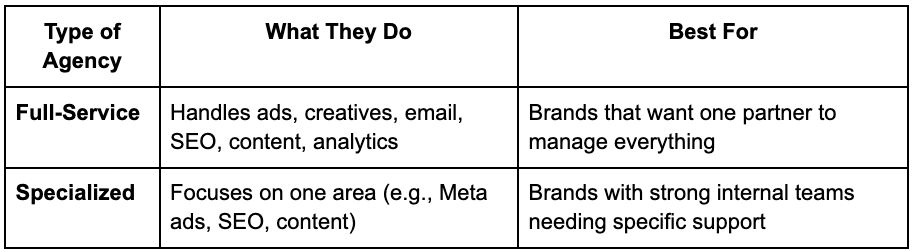
Most Singapore SMEs prefer full-service so everything works together smoothly.
Core Service Offerings
Good ecommerce agencies usually provide:
- Paid ads management (Meta, Google, TikTok)
- Creative production (UGC, videos, photos, statics)
- Email & SMS automation
- Marketplace marketing (Shopee / Lazada Ads)
- Website optimization & CRO
- Analytics & reporting
You want an agency that can handle both traffic and conversion.
Agency Partnership Models
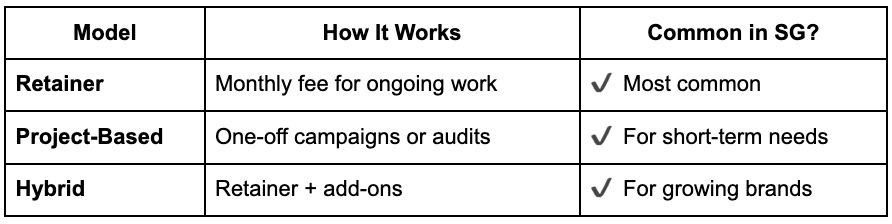
Choose a model that matches your current stage.
Performance Expectations and Deliverables
A reliable agency will give you:
- Clear projections (not guarantees)
- Transparent reporting dashboards
- Weekly or biweekly updates
- Creative testing plans
- ROAS/CPL targets
- Tracking setup before launching ads
If an agency can’t show what they’re doing or refuses to share data — walk away.
Ecommerce Marketing Tools and Technology Stack
Using the right tools makes ecommerce marketing easier, faster, and more profitable. Below is a simple breakdown of the most useful tools for Singapore brands.
Essential Marketing Automation Platforms
Automation helps you nurture customers and increase repeat purchases.
Top tools:
- Klaviyo – best for Shopify brands
- Mailchimp – simple email campaigns
- Omnisend – ecommerce-specific features
- SMSBump – for SMS marketing
Use automation to send abandoned cart reminders, welcome offers, and win-back messages.
Analytics and Tracking Tools
Tracking shows you what’s working so you can scale safely.
Must-haves:
- Google Analytics 4 (GA4)
- Shopify / WooCommerce Analytics
- Meta Pixel & Conversion API
- TikTok Pixel
- Google Ads conversion tracking
- UTM parameters for all ad links
This data tells you your real cost per purchase and ROAS.
Design and Content Creation Software
Good creatives = better conversions.
Recommended tools:
- Canva – easy graphics and social posts
- CapCut – edit TikTok & Reels quickly
- Adobe Photoshop/Premiere – advanced editing
- Figma – layout and design planning
Clear visuals and simple videos always perform best in the Singapore market.
Customer Relationship Management (CRM)
CRMs help you track customer behaviour and manage retention strategies.
Popular choices:
- HubSpot – all-in-one CRM
- Klaviyo CRM – built for ecommerce
- Zoho CRM – affordable and flexible
- Shopify’s built-in CRM – simple and effective
Use CRM data to improve product recommendations and upsells.
Integration and Workflow Optimization
To avoid manual work, connect your tools together.
Examples:
- Sync Meta ads ↔️ Shopify events
- Send UTM data into GA4
- Connect Klaviyo to Shopify for automated flows
- Use Zapier to automate repetitive tasks
A smooth workflow saves time and prevents data loss — something crucial for scaling.
Common Ecommerce Marketing Mistakes and How to Avoid Them
Even strong ecommerce brands in Singapore make mistakes that hurt sales. The good news? Most of these issues are easy to fix once you know what to look out for.
Platform-Specific Pitfalls
Every platform has its own rules. What works on Shopee may fail on TikTok. What works on Meta may not work on Google.
Common Pitfalls:
- Using the same creative on Meta and TikTok
- Ignoring Shopee/Lazada keywords
- Not optimising mobile layouts for Singapore users
- Uploading poor-quality photos on marketplaces
How to Avoid:
Adapt your content for each platform. TikTok needs short videos, Shopee needs keyword-rich titles, and Meta needs hooks that stop scrolling.
Budget Allocation Errors
Many SMEs spread their budget too thin or spend everything on the wrong platform.
Common Pitfalls:
- Spending too much on “boosted posts”
- Putting 80% of budget only on Meta
- Not reserving a budget for testing
How to Avoid:
Follow a simple rule: 70% on winners, 30% on testing.
This keeps your results stable while you experiment.
Compliance and Legal Oversights
SG has strict rules for ads and data protection.
Common Pitfalls:
- Missing consent checkboxes
- Unclear pricing or exaggerating benefits
- Not following ASAS advertising guidelines
How to Avoid:
Be transparent. Avoid overclaiming. Make sure PDPA and ASAS rules are followed on all campaigns.
Measurement and Attribution Mistakes
Without proper tracking, you won’t know what drives your sales.
Common Pitfalls:
- No GA4 setup
- Missing Meta Pixel or CAPI
- No UTM tracking
- Using “last click only” attribution
How to Avoid:
Set up full-funnel tracking before running ads. This helps you scale based on real numbers, not guesses.
Future-Proofing Your Ecommerce Marketing Strategy
Ecommerce in Singapore is changing fast — new platforms, new behaviours, and new technology. To stay ahead, your marketing must evolve too.
Emerging Technologies and Trends
AI tools, smart recommendation engines, and automation are shaping the future of ecommerce.
Expect more:
- AI-generated content
- Automated product recommendations
- Smarter ad optimisation
- More advanced personalisation tools
Use these tools early to gain an edge.
Evolving Consumer Behavior Patterns
Singapore shoppers love:
- Fast shipping
- Local reviews
- Real demos (especially on TikTok)
- Cashback, bundles, and seasonal promos
Your marketing should mirror how they actually shop today — not how they shopped five years ago.
Platform Evolution and Adaptation
TikTok Shop is rising. Shopee and Lazada are tightening competition. Meta is changing its algorithm.
Brands must adapt by:
- Testing new ad formats
- Updating creatives regularly
- Using new marketplace features early
The early adopters usually win.
Building Scalable Marketing Systems
Growth shouldn’t depend on luck — it should come from systems.
To future-proof your marketing:
- Build evergreen ad angles
- Create a library of UGC videos
- Set up email flows for retention
- Use clear tracking and dashboards
- Standardise your creative testing process
A scalable system makes your store stable — no matter how platforms change.
Getting Started: Your Ecommerce Marketing Implementation Roadmap
Growing an ecommerce business in Singapore doesn’t happen overnight. It happens in phases, where each stage builds on the one before it. Here’s a clear roadmap to follow.
Phase 1: Foundation and Setup (Months 1–2)
This is where you prepare your store for growth.
What to Focus On:
- Set up Meta Pixel, TikTok Pixel, Google Ads tracking
- Improve product pages (photos, benefits, SG delivery info)
- Install email automation flows (welcome + abandoned cart)
- Create 5–10 reusable video ads
- Optimise site speed and mobile layout
Goal:
Make sure your store is ready to convert traffic into sales.
Phase 2: Channel Optimization (Months 3–6)
Once the foundation is strong, it’s time to improve performance.
What to Do:
- Test multiple ad creators on Meta, TikTok, and Google
- Identify your best audiences
- Improve product page conversion rate
- Run retargeting ads to recover abandoned carts
- Start building SEO with blogs or guides
Goal:
Find what works and reduce your cost per purchase.
Phase 3: Scale and Expansion (Months 6+)
Now that your system is stable, you can scale safely.
What to Do:
- Increase ad budgets gradually (10–20% weekly)
- Launch more products or variations
- Expand to new channels (TikTok Shop, Marketplace Ads)
- Start influencer and affiliate partnerships
- Explore cross-border sales
Goal:
Grow profitably without breaking your system.
Resource Requirements and Team Building
As you grow, you’ll need more help.
Suggested Team Structure:
- Marketing Manager (in-house or agency)
- Creative Lead (UGC, video editing, statics)
- Performance Marketer (Meta, Google, TikTok)
- Customer Support (fast replies = more sales)
- Part-time consultant for strategy (optional)
A strong team lets you scale without losing control.
Ready to Scale with Omni Digital?
Most businesses in Singapore don’t fail because their products are bad — they fail because their marketing doesn’t convert.
If you’re tired of guessing what works and want a clear, proven way to turn ad spend into sales, Omni Digital can help.
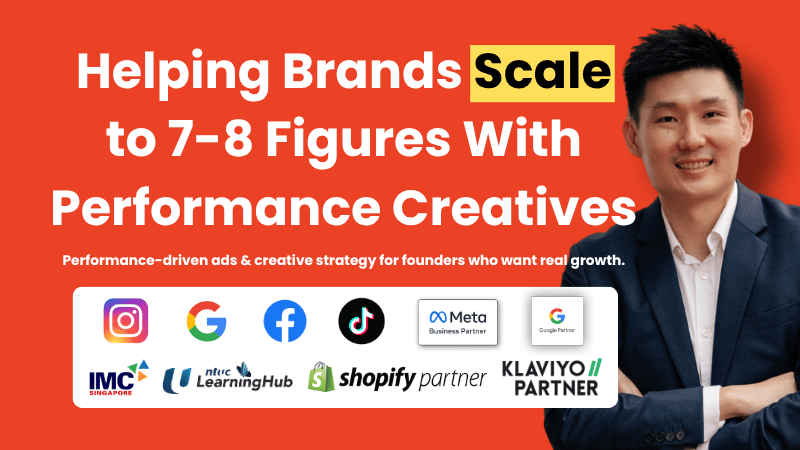
At Omni Digital, we don’t just run ads. We build conversion systems that connect creative, media buying, and analytics, helping brands scale from stuck in 5 figures to 7-8 figures of monthly revenue in less than 5 months while keeping every dollar accountable.
Whether you’re an e-commerce brand, tuition centre, or home & living business, our ROAS Maximizer System is built to help you:
✅ Lower cost per lead and boost ROI
✅ Find your most profitable audiences
✅ Turn ad views into repeat customers
If you want to see what ecommerce marketing done right looks like — and how it can scale your business predictably — let’s talk.
👉 Book a free strategy call with Omni Digital today to discover how to grow smarter, faster, and profitably.